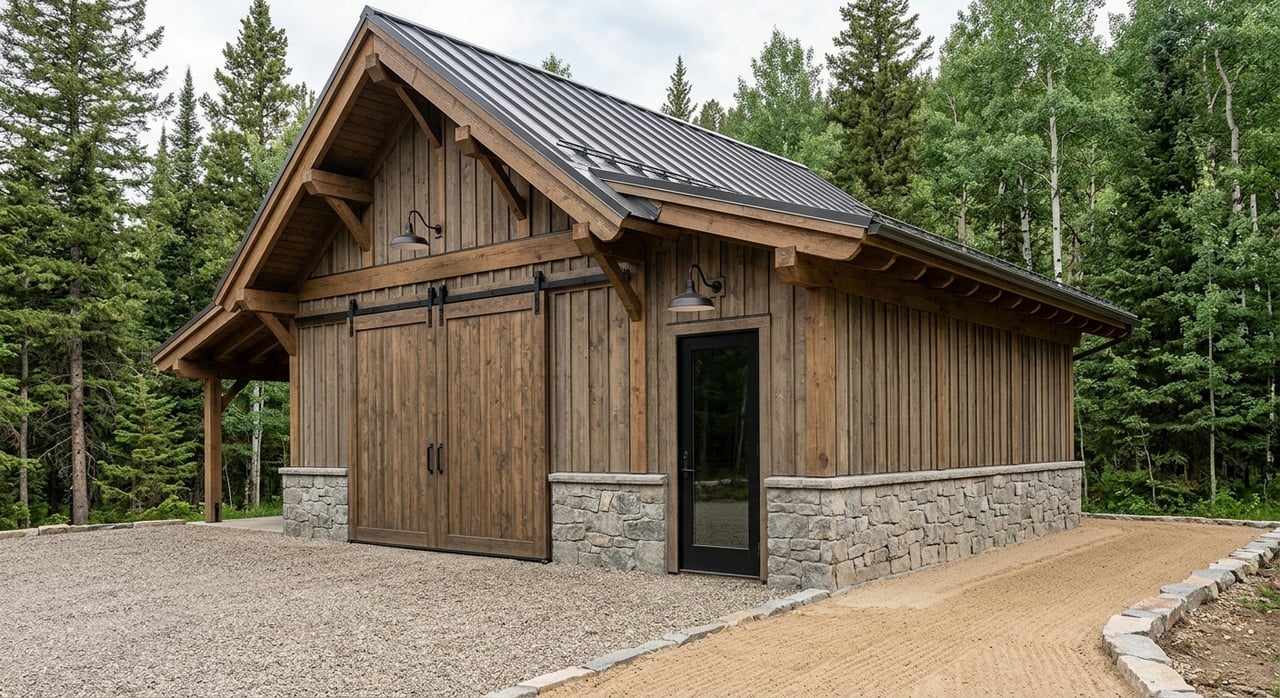
If you are looking at acreage or horse property in Old Snowmass, the biggest surprise is often this: more land does not automatically mean more usable rights. Two properties can look nearly identical from the road, yet have very different rules for barns, water use, storage, or horse-related activities. If you want a property that supports both your lifestyle and long-term value, careful due diligence matters from the start. Let’s dive in.
Why zoning comes first
In Old Snowmass, zoning can shape your options more than the raw acre count. Pitkin County’s land use code is designed to preserve rural and agricultural character, and rural parcels may fall into districts such as RR, RS-35, LIR-35, RS-30, RS-20, AR-10, AR-2, SKI-REC, and B-1, each with different standards for use and development.
That matters because a parcel that seems ideal for horses may not allow the same accessory structures or uses as a nearby property. According to Pitkin County’s land use code, rural zoning is highly specific, and the exact district should be confirmed before you assume you can add barns, storage, or any equestrian-related improvements.
Key zones to understand
For many acreage buyers, AR-10, LIR-35, and RR deserve special attention. AR-10 is intended for small-scale agriculture and large-lot residential development, while LIR-35 and RR can carry tighter accessory-use limits that affect hobby ranch or low-intensity horse ownership.
In LIR-35 and RR rules, the distinction is especially important. In LIR-35, accessory structures and uses are tied closely to a single-family residence and may be paired with farming or ranching only if they are not primarily for monetary profit. In RR, new accessory structures are generally not allowed.
If your goal is private horse keeping rather than a commercial operation, those differences can directly affect how practical a parcel will be. This is one of the first items worth reviewing before you move too far into contract.
Barn rules are highly specific
Pitkin County does not use a broad, one-size-fits-all horse-property standard. Instead, the code lays out detailed dimensional rules for barns, loafing sheds, and agricultural storage buildings based on parcel size.
That means a property with enough room for horses may still have limits on what you can build. Before you budget for improvements, it helps to understand how the county measures barn height, floor area, and supporting structures.
Barn height and size limits
Under Pitkin County barn standards, barn height and floor-area exemptions scale with acreage:
- On parcels under 10 acres, barns are limited to 20 feet by right and 25 feet maximum
- On parcels from 10 to under 35 acres, barns are limited to 25 feet by right and 30 feet maximum
- On parcels of 35 acres and larger, barns are limited to 28 feet by right and 33 feet maximum
Floor-area exemptions also increase with parcel size. The county notes that barn floor-area exemptions rise from 1,160 square feet on parcels from 5 to under 20 acres to unlimited on parcels of 160 acres or more.
Run-in sheds and storage matter too
Horse owners often focus on the main barn, but secondary structures are just as important in day-to-day use. The same county standards provide that run-in or loafing sheds must be three-sided.
For parcels under 20 acres, each run-in or loafing shed is capped at 300 square feet. On parcels of 20 acres or more, an unlimited number of these 300-square-foot sheds may be allowed under the code. That can make a meaningful difference in how you plan turnout areas and shelter.
Arenas need separate review
If you are planning an arena, do not assume it is covered by the barn rules alone. Based on the county’s detailed structural standards and broader drainage and erosion requirements, arena planning should be reviewed as its own grading, drainage, and site-impact question.
This is especially important on sloped land or on parcels with sensitive drainage patterns. In practical terms, a property may have room for an arena but still face design or permitting constraints that affect cost and timeline.
Commercial equestrian use is different
There is a major difference between keeping your own horses and running an equestrian business. In Pitkin County, commercial uses should be analyzed separately from private residential or agricultural use.
For example, the county states in its use regulations that a horse boarding facility is limited to 10 visitor trips per day. That may not affect a private buyer with a few horses, but it is a meaningful constraint if you are considering boarding, lessons, clinics, or another income-producing use.
If business use is part of your vision, it is wise to verify that plan early rather than treating it as a future option. A parcel that works beautifully for personal use may not support commercial equestrian activity in the same way.
Water can make or break the property
In Old Snowmass, water due diligence is often the deciding factor. A parcel can look green, irrigated, and fully functional, yet still lack the legal rights needed for pasture, stock watering, or future improvements.
Pitkin County explains in its water and augmentation guidance that many rural users rely on public systems or wells, while irrigation water is often diverted through ditches or delivered by ditch companies. The county also notes that it has about 11,700 acres of irrigated agricultural land, which shows how important irrigation infrastructure is across the region.
Do not assume a ditch means water rights
One of the most common mistakes is assuming that visible water equals usable water. Pitkin County is clear that a ditch crossing your property does not automatically give you the right to pump from it.
If irrigation matters to you, verify:
- Deeded water rights
- Any ditch-company relationship
- Any augmentation agreement
- Whether the water can legally be used for pasture
- Whether it can be used for stock watering or barn-related needs
For horse-property buyers, this is not a small technical detail. It can be the difference between a property that supports your intended use and one that only appears to.
Well rights can be limited
Well type matters just as much as water availability. The county states that on tracts not created through subdivision, a 35+ acre exempt well may serve up to three single-family dwelling units, plus domestic stock watering, irrigation of up to one acre of lawn and gardens, and fire protection.
By contrast, the county explains that commercial exempt wells and non-exempt wells follow different rules, and that higher-water-use activities such as horse boarding do not qualify under commercial exempt well standards. In most non-exempt situations, augmentation plans must be approved in water court.
Older or smaller parcels may have another major limit. In-house-use-only exempt wells do not allow outside irrigation or livestock watering, which can be a serious issue for buyers expecting horse or pasture use.
Springs and ponds need careful review
Natural water features can make a property more attractive, but they also need legal review. Pitkin County notes that springs, seeps, and ponds are usually subject to Colorado’s prior appropriation system, and pond creation or enlargement may require proof of water rights and additional permits if wetlands are affected.
If a property’s appeal depends on a pond, spring, or riparian feature, make sure you understand both the rights and the limits. Features that look permanent and usable in marketing photos may involve separate legal and environmental considerations.
Trails and access shape lifestyle value
For many buyers, Old Snowmass is about more than the parcel itself. It is also about how the property connects to the broader outdoor lifestyle that makes this part of Pitkin County so appealing.
The Rio Grande Trail is one of the clearest examples. The county says it is open year-round, groomed for winter nordic use when conditions allow, and permits horseback riding. For equestrian-minded buyers, that is a meaningful lifestyle amenity.
Access is not the same everywhere
Trail access is not uniform throughout the area. Some nearby trails have seasonal wildlife closures, and the county notes that many trails cross private land and should be used only as groomed routes.
The county also explains in its open space permit guidance that commercial use on open space and trails is prohibited unless specifically permitted. That matters if you are imagining guided rides, ranch events, or another activity that depends on public-land access.
Even nearby recreation systems can have different allowed uses. For example, the county’s e-biking page shows how route-specific rules apply in this area, which is a good reminder to verify actual trail permissions by location and management plan rather than relying on assumptions.
Stewardship affects long-term ownership
Acreage ownership in Old Snowmass comes with responsibility as well as privacy and space. Pitkin County development standards address erosion and sediment control, weed prevention, natural drainage preservation, and special treatment for wetlands and riparian areas.
According to county guidance on stormwater and site protections, livestock or horses next to wetlands must be addressed in the site plan, overgrazing should be avoided, and development in wildlife habitat can trigger large buffers or seasonal construction limits. These are important considerations when comparing a parcel with broad open meadows versus one with sensitive environmental features.
Resale often follows usability
From an investment perspective, the easiest properties to own and resell are often the ones with strong documentation and fewer unknowns. Parcels with clear water rights, compliant horse infrastructure, and straightforward access may offer more flexibility over time.
On the other hand, properties with riparian, wildlife, or conservation constraints may provide strong privacy and protected open-space character, but less room for future expansion. For many buyers, the right choice depends on whether you value flexibility, preservation, or a balance of both.
What to review before you buy
If you are evaluating acreage and equestrian property in Old Snowmass, these are the questions worth answering early:
- What is the exact zone district?
- Are barns, sheds, and accessory structures allowed as you intend to use them?
- Is the use private, agricultural, or commercial under county rules?
- What water rights are deeded with the property?
- What kind of well serves the parcel, and what outside use is allowed?
- Is there legal irrigation water for pasture or stock watering?
- Are there wetlands, drainage, wildlife, or erosion constraints?
- How direct and dependable is road or trail access?
Buying acreage in this area is often as much about verification as vision. The right property can be an exceptional long-term asset, but the best outcomes usually come from matching your goals to the parcel’s actual rights and constraints.
If you want a clear, disciplined approach to evaluating Old Snowmass acreage, Mary Kate Farrell brings local market knowledge and finance-informed guidance to help you assess both lifestyle fit and long-term value.
FAQs
What should you verify before buying equestrian property in Old Snowmass?
- You should confirm zoning, allowed accessory structures, water rights, well limitations, irrigation rights, and any environmental or access constraints before you buy.
How does zoning affect horse property in Old Snowmass?
- Zoning can determine whether a parcel supports barns, storage, private horse keeping, or certain agricultural uses, and similar-looking properties may have very different rights.
Can you build a barn on any acreage parcel in Pitkin County?
- No, barn size and height depend on parcel size and county rules, and some zone districts have tighter limits on accessory structures.
Do water ditches on Old Snowmass property come with water rights?
- No, Pitkin County states that a ditch crossing a property does not automatically give the owner the right to pump or use that water.
Can an exempt well support horse use in Old Snowmass?
- It depends on the well type, because some exempt wells allow domestic stock watering while in-house-use-only wells do not allow outside irrigation or livestock watering.
Are horse boarding uses treated differently from private horse keeping in Pitkin County?
- Yes, commercial equestrian uses such as boarding are regulated differently, and the county limits horse boarding facilities to 10 visitor trips per day.
Does trail access increase the value of Old Snowmass acreage?
- Trail access can add meaningful lifestyle value, especially where horseback riding is permitted, but access rules vary by trail and should always be verified.
What makes acreage easier to own and resell in Old Snowmass?
- Properties with documented water rights, compliant improvements, clear access, and fewer wetland or wildlife conflicts are often easier to use and market over time.